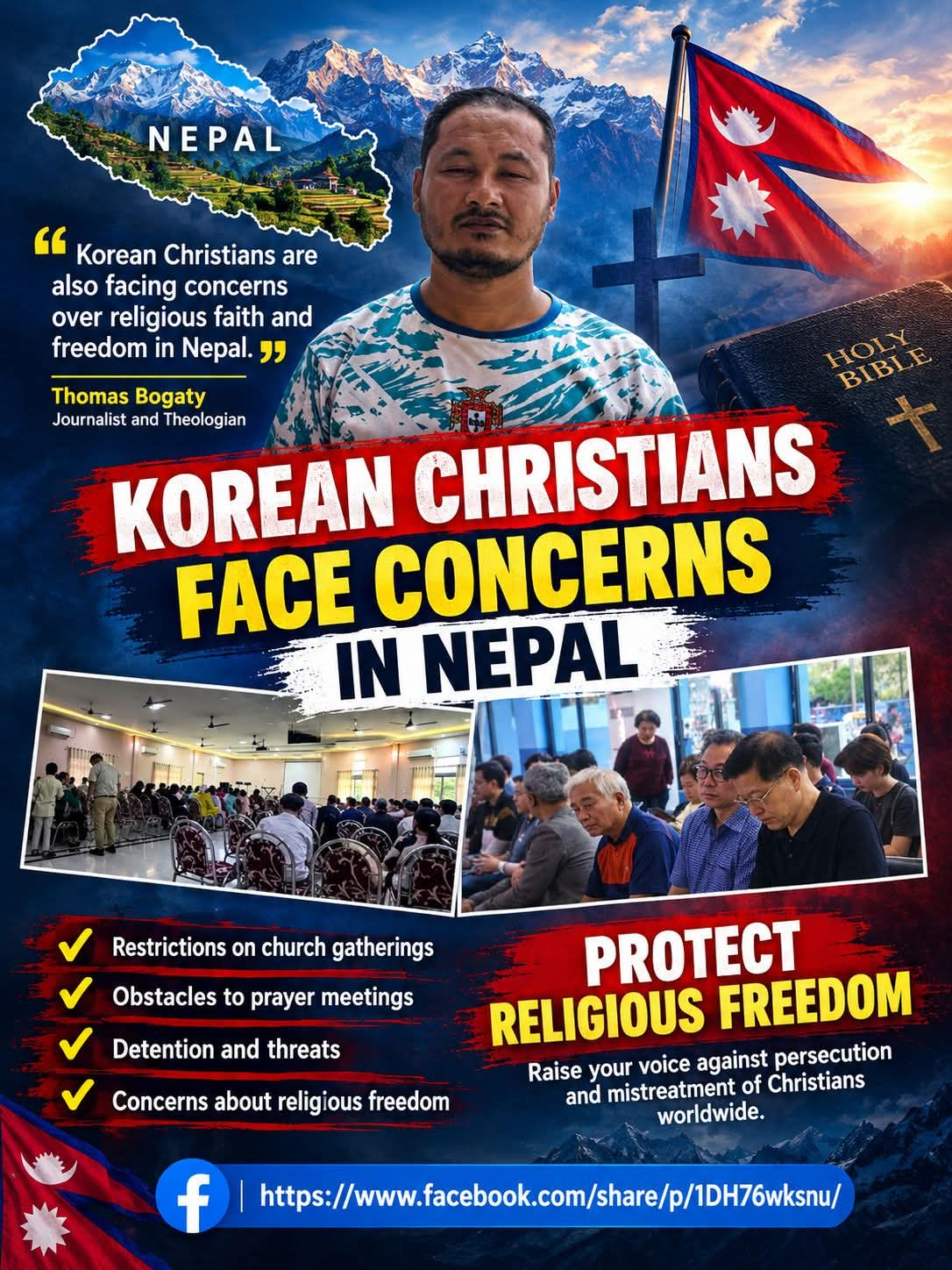
A Facebook post in Thomas Bogaty page https://www.facebook.com/share/p/1NnyzsqFSy about 10 foreigners detained in eastern Nepal becomes a flashpoint for nationalism and religious freedom online.
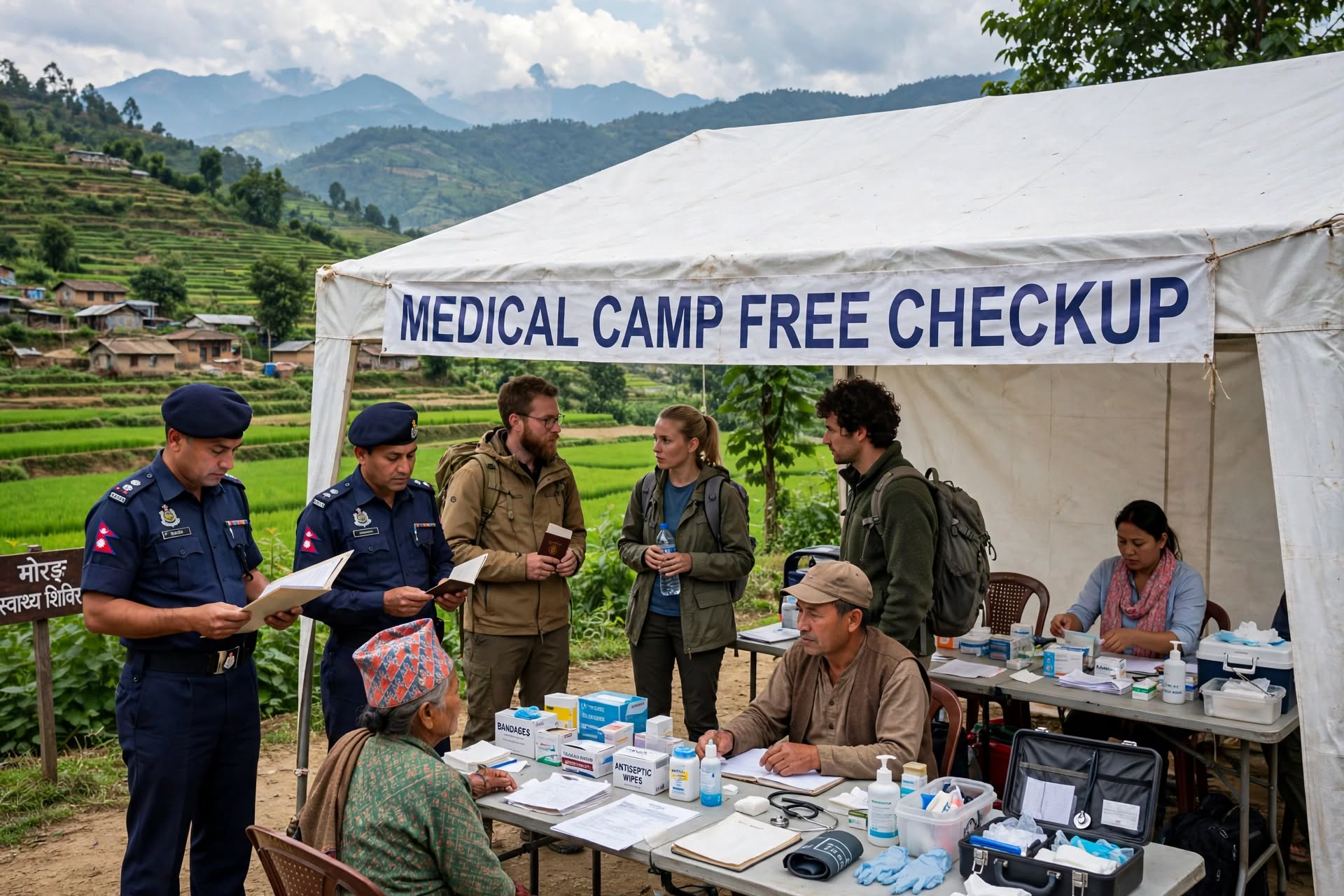
On a misty morning in Morang, a free health camp set up under a white tarpaulin tent ended with 10 foreign nationals being detained by local authorities. Police said the group — described in initial reports as foreign Christians — were providing medical services while on tourist visas, with allegations that health activities were linked to missionary outreach. The details remain contested, but the image was enough: a Facebook post about the detention went viral within hours.
Analysis 1 The Comment Divide
Under the original post, more than two thousand comments formed two distinct moral universes. Neither side argued only about visas. Both used the incident as evidence for a larger story they already believed about Nepal.
Camp A: Protect Culture
Core arguments observed:
- Tourist visas must not be used for organized service work; rules apply equally regardless of intention.
- Free aid can create uneven influence in vulnerable rural communities, especially when paired with religious messaging.
- Local governance should verify permits, health qualifications, and community consent before any camp.
- Nepal’s cultural and religious traditions deserve protection from perceived outside pressure.
Camp B: Religious Freedom
Core arguments observed:
- Providing free medical care should be seen as humanitarian, not automatically as conversion.
- Nepal’s constitution guarantees secularism and religious freedom; detention must follow clear legal process.
- Accusations of missionary activity need evidence beyond presence of faith-based volunteers.
- Targeting foreign helpers risks discouraging needed health support in underserved areas.
Editorial note: Summaries above are paraphrased from public comments. No profanity, slurs, or personal identifiers are reproduced.
“For many, the legal question is secondary. The real debate is about identity.”
— recurring theme in comment threads, Oct 26–27
Analysis 2 From Debate to Personal Attacks
As the post spread, the tone shifted. What began as arguments over visas and intent quickly became personal. Commenters who had never met each other traded curses, wishes for misfortune, and moral condemnations. Moderators and other users intermittently asked for calm, but the algorithm favored heat.
Three patterns were consistent across hundreds of replies:
Moral cursing
Invocations of illness, ruin, or karmic punishment directed at the opposing side, rather than engagement with facts.
Ad hominem sorting
Labeling commenters as ‘paid,’ ‘anti-national,’ or ‘extremist’ to dismiss arguments without addressing them.
Proof by repetition
The same unverified claims about conversions or persecution pasted across threads, presented as common knowledge.
No threats that meet platform reporting thresholds were reproduced for this analysis. The focus here is on how quickly a policy question becomes a character trial.
Analysis 3 The Political Undercurrent
Sprinkled among the arguments was a familiar name: Balen. Mentions of Kathmandu’s mayor — often invoked as a symbol of direct action and anti-establishment governance — appeared even though Morang is a separate jurisdiction. For some commenters, the detention proved that local government can act when it wants to. For others, it proved selective enforcement.
The Balen reference is less about Morang procedure and more about a national mood: frustration with inconsistent rules, hunger for decisive authority, and distrust that law is applied evenly to Nepali citizens and foreigners alike.
That frustration is not partisan. Both camps used it. One side asked why rural municipalities allow unverified camps at all. The other asked why humanitarian volunteers are detained while larger governance problems go unchecked.
Analysis 4 What’s Missing
Viral posts move faster than paperwork. As of the time of publication, several basic questions had no public answers:
What exact visa categories were held, and what activities does immigration law permit on those visas?
Did the organizers have a municipal permit, health qualification verification, or ward-level approval for a free camp?
Were local health workers or community leaders consulted, and what do patients who attended say about what was offered?
Has there been a formal statement from the District Administration Office or Immigration Department beyond initial detention?
What is the current legal status — release, fine, deportation process, or further investigation?
Without those answers, the comment section fills the gap with certainty. That certainty is the story.
Analysis 5 Takeaway
Nepal’s secularism was never meant to be silence about religion. It was meant to be a framework for how a deeply faithful society lives with difference — and how law mediates that difference.
The Morang incident touches three sensitive wires at once: sovereignty (who can do what on whose land), aid (when help feels like influence), and faith (where service ends and persuasion begins). Facebook’s design rewards the most absolute version of each.
If the goal is clarity rather than heat, the next step is not more commenting, but more reporting: municipal records, immigration rules in plain language, and voices from Morang itself — health workers, ward officials, and the patients who lined up before police arrived.
Until then, the camp tent becomes a Rorschach test. What people see in it says more about Nepal’s unresolved debate on identity than about 10 foreigners in a field.
About this piece
This analysis is based on public social media posts and comment threads observed Oct 26–28, 2026, plus background on Nepal immigration and municipal health camp procedures. No private individuals are named. No hateful or profane language is reproduced. For corrections, contact crossmessagenews@gmail.com
Fact-check pending: permits
Location: Morang

Socioligist, Communication Expert, Certified Mediator, Certified Community Legal Document Assistant, Coach, Writer, Translator cum Interpreter, YouTuber, Master Teacher of some biblical training, Content Creator.
Contact for above services and consultation:
thomasbogaty@gmail.com
Watsapp: +977-9813249433
CHARGES AS PER THE SERVICE