Reflections on Psalm 41, human frailty, and the God who remains our refuge in times of distress
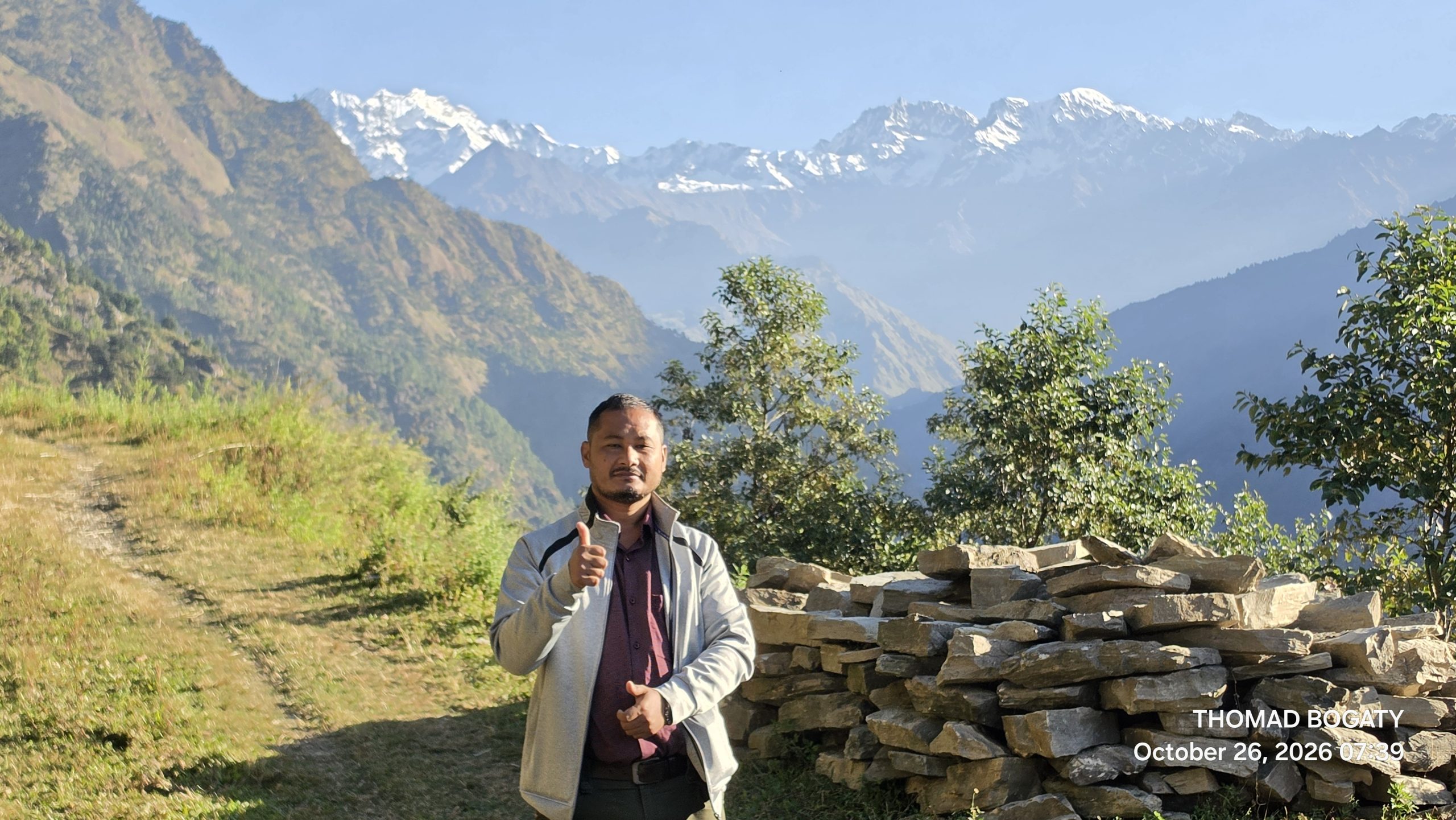
Just a few days ago, I was in the lap of the Himalayas. But last night, after returning to Kathmandu, I found myself facing a moment so frightening that I felt I might be standing at the very edge of life and eternity.
It was around midnight when an unbearable pain suddenly struck my abdomen. The pain was so intense that I began to sweat profusely. I had never experienced anything like it before. I tossed and turned, fell to the floor, and struggled to endure the agony. With every breath, I could only whisper, “Lord! Lord!”
What was happening to me? Could it have been gallstones or kidney stones? Was something seriously wrong inside my body? Why had such excruciating pain come upon me so suddenly, without warning?
I had no answers. At that moment, all I knew was that I was suffering—and that my human strength was failing me.
When Human Strength Fails, God Becomes Our Refuge
As a believer in God, I have long held certain convictions about faith, spiritual principles, and the sovereignty of the Lord. Yet, when I found myself overwhelmed by pain, I was brought face-to-face with a deeply personal question: Would I continue to hold on to my faith and the spiritual principles I professed, even when I could barely bear the suffering?
In that moment, I realized that beyond every principle, doctrine, and theological understanding stands the Lord Himself—the very source of the faith we profess. When our strength disappears, He remains our refuge. When our understanding fails, we can still cry out to Him. And when we find ourselves helpless, we are reminded that our lives are not sustained by our strength alone.
My thoughts turned to the Word of God, particularly Psalm 41.
That psalm became more than a passage of Scripture to remember or explain. It became a personal prayer in the middle of my suffering—a place to bring my weakness, my fears, my confession, and my desperate plea for mercy.
I found myself approaching God with humility, asking Him to search my heart, forgive my sins, and teach me the lessons I needed to learn. Lying there in agony, I was reminded of how fragile human life truly is. The things we often consider important can suddenly lose their significance when we are confronted with the possibility of death.
At such a moment, the heart longs for mercy, forgiveness, healing, and another opportunity to live differently.
Psalm 41: A Prayer from the Depths of Suffering
Psalm 41 speaks of God’s concern for the weak and vulnerable, the psalmist’s plea for mercy, and the assurance that the Lord sustains those who call upon Him.
One verse became especially meaningful to me:
“But you, Lord, have mercy on me; raise me up, that I may repay them.” — Psalm 41:10 (NIV)
The words of this psalm reminded me that even in our darkest hours, we can approach God honestly and humbly.
As I lay there, overwhelmed by pain, I prayed with a sincerity that words can hardly describe. I reflected on my life, my conduct, my shortcomings, and my relationship with God. I asked for mercy and sought to understand what I could learn from that frightening experience.
I must be honest: in those moments, my greatest concern was not merely the physical pain. It was the condition of my heart before God. I felt an urgent need to confess my sins, repent, and seek His forgiveness.
This was not because I believed that every illness is necessarily the result of personal sin. Rather, suffering brought me into a moment of profound self-examination, when I felt compelled to stand honestly before my Creator.
There is a difference between explaining suffering and allowing suffering to teach us something. I could not explain why the pain had come upon me, but I could choose to use that moment to examine my life, humble myself, and draw closer to God.
Sometimes, the lessons we understand intellectually become real to us only when life brings us to our knees.
Why I Am Grateful to Be Alive This Morning
Today, I am alive. The pain has eased, and I am experiencing a welcome improvement in my condition. I can move around, jump, and even shout with renewed energy—things that seemed impossible during those terrifying hours.
I feel as though I have been given another opportunity to appreciate the precious gift of life.
I cannot fully explain what happened to me during the night, and I do not want to make medical assumptions about the cause of the pain or its subsequent improvement. But I can testify to what that experience meant to me spiritually: it drove me to prayer, repentance, humility, and a renewed appreciation of God’s mercy.
For that, I am deeply grateful.
My recovery has reminded me that health is not something to take for granted. We often go about our daily lives as though our strength will always be available and tomorrow is guaranteed. We make plans, pursue ambitions, engage in arguments, and become preoccupied with the concerns of the world.
Then, sometimes without warning, a single night of suffering reminds us how vulnerable we really are.
Our bodies are fragile. Our time is uncertain. Our lives are precious.
Every new morning is an opportunity to give thanks, to love more generously, to forgive more readily, and to live with greater purpose.
Suffering Has Taught Me to Understand Other People’s Pain
One of the most important lessons I have learned through this experience is the need to understand the suffering of others.
When someone dies unexpectedly or leaves this world sooner than we anticipated, we often struggle to understand the circumstances surrounding their death. We may question their decisions, judge their condition, or assume that we know what they were going through.
But how much can we truly understand another person’s suffering until we have experienced helplessness ourselves?
During those painful hours, I began to appreciate more deeply the desperation that can accompany severe physical suffering. I understood how difficult it can be to think clearly, communicate effectively, or explain what is happening when pain overwhelms the body.
I could better understand why a suffering person might cry out, behave differently, or desperately seek relief. I could also better appreciate the emotional burden carried by those who watch their loved ones suffer without knowing how to help.
This experience has softened my heart.
I want to become more compassionate toward people who are sick, weak, distressed, or approaching the end of their lives. I want to listen before judging, understand before criticizing, and offer kindness instead of condemnation.
We do not always know the private battles others are fighting. Behind a person’s silence may be unbearable pain. Behind their unusual behavior may be fear or exhaustion. Behind a seemingly ordinary day may be a struggle that others cannot see.
If suffering can teach us anything, let it teach us to love people more deeply.
From this day forward, I want to extend love to everyone—not merely to those who agree with me, appreciate me, or treat me well, but also to those whose experiences and attitudes I may not understand.
God’s Strength Is Made Perfect in Our Weakness
The Bible repeatedly reminds us that human strength has limits, but God’s grace is sufficient.
As the apostle Paul writes:
“My grace is sufficient for you, for my power is made perfect in weakness.” — 2 Corinthians 12:9 (NIV)
I have often read these words, but an experience of helplessness gives them a different kind of meaning.
Weakness reminds us that we are not self-sufficient. It challenges our pride and reveals the limits of our abilities. It teaches us that wealth, influence, education, social standing, and human relationships cannot guarantee freedom from every crisis.
These things can be valuable, and the support of family, friends, medical professionals, and others can be essential. We should never dismiss the importance of practical help or appropriate medical care.
Yet there are moments when we realize that none of our resources can offer an absolute guarantee of survival.
In those moments, even the most powerful person may acknowledge that the situation is beyond human control and that only God can ultimately preserve life.
This is the truth behind the familiar expression: “Only God can save you now.”
It does not mean that we should abandon reason, medical treatment, or human assistance. Rather, it reminds us that we are not in complete control of our lives and that humility is essential, regardless of our position or power.
For a believer, prayer becomes an expression of trust in God—not a denial of human weakness, but an acknowledgment of it.
When suffering comes, we pray. When fear overwhelms us, we pray. When we do not understand, we pray. And when relief comes, we give thanks.
A Difficult but Valuable Lesson in Repentance
That night, as I struggled with the pain, I felt an overwhelming need to examine my life before God.
I confessed my sins and repented, asking the Lord to forgive me and help me learn what I needed to learn. In that moment, the condition of my soul seemed far more important than my arguments, ambitions, or personal achievements.
I do not claim to know why God permitted me to experience that pain. Nor do I claim that my suffering was proof of divine punishment. But I know that it became an occasion for serious reflection and spiritual renewal.
Repentance is not simply an emotional reaction to fear. It is a willingness to acknowledge our failures, turn away from wrongdoing, and seek a better way of living.
The experience reminded me that we should not wait until we are lying helpless in pain before examining our hearts.
We should seek reconciliation while we have the opportunity. We should forgive while we can. We should make amends where necessary, speak truthfully, and treat others with dignity.
Life is too precious to waste on hatred, bitterness, jealousy, and unnecessary conflict.
If we have been given another morning, perhaps one of the best ways to express our gratitude is to live that day with greater humility, integrity, and love.
To Those Who Have Wished for My Suffering
There is another deeply personal aspect of this reflection.
I know that some people have said to me—and some may still say—words to this effect:
“Why doesn’t he get sick? Why are we the only ones who have to suffer from illness?”
Perhaps these words have been spoken out of frustration, bitterness, or the pain of seeing others struggle with health problems. I cannot know what lies in every person’s heart.
But today, I want to make one thing clear.
I am human. I can become weak. I can experience pain. I can be physically exhausted. I am not beyond suffering, nor am I immune to the limitations that affect every human being.
The fact that someone may appear healthy does not mean that they will never experience a crisis. And the fact that someone becomes ill does not mean that they are less faithful, less loved by God, or less deserving of compassion.
Health is not a measure of a person’s spiritual worth.
I am grateful that my condition has improved, but I do not want my experience to become a reason to boast over anyone who remains sick. Instead, I want it to make me more understanding of those who continue to suffer.
To anyone who has struggled with illness, I offer my sympathy and encouragement. May you receive the care, support, strength, and comfort you need. And may those around you respond with compassion rather than judgment.
As for me, I am thankful to have come through a frightening night and to be experiencing renewed strength.
I feel as though I have been reminded that weakness is part of being human—and that humility is far more valuable than pride.
A Renewed Appreciation for Life and Health
Now that the worst of the pain has eased, I want to look more deeply at the priceless gifts of health and life.
I want to appreciate the simple things that are so easy to overlook: waking up in the morning, breathing without distress, walking without difficulty, speaking with loved ones, and having the strength to carry out ordinary responsibilities.
These everyday experiences may seem insignificant until we are suddenly deprived of them.
I also recognize that my improvement does not necessarily mean that the underlying cause of the pain has been identified or resolved. Severe abdominal pain can have serious causes, even when it later subsides. If such pain returns or persists, I must seek urgent medical assessment rather than relying on prayer alone.
Faith and responsible medical care need not be in conflict. We can pray sincerely while also taking the practical steps necessary to protect the life we have been given.
For now, I am grateful for the relief I am experiencing, the opportunity to reflect, and the renewed desire to live with greater wisdom.
I want to use this experience not merely as a story about a painful night, but as a reminder of the responsibilities that accompany the gift of another day.
My Prayer of Thanksgiving
Lord, thank You for sustaining me through a frightening night. Thank You for the relief I am experiencing and for the opportunity to awaken to another morning.
Forgive me where I have failed You. Teach me to examine my heart honestly, to repent sincerely, and to live according to Your truth.
Give me compassion for those who suffer, patience with those who are weak, and wisdom to understand that every human life is precious.
Help me to love people without prejudice, to refrain from judging what I do not understand, and to offer kindness to those who need encouragement.
Remind me that my strength is limited, my life is precious, and every day is an opportunity to serve You and love others more faithfully.
May I never take good health for granted. May I never mistake physical strength for spiritual superiority. And may I never forget the lessons learned when I found myself helpless before You.
Amen.
Conclusion: I Was Weak, I Suffered, and I Am Grateful to Be Alive
This is the testimony of a man who experienced a frightening night of physical suffering, cried out to God, examined his heart, and awakened to a renewed appreciation of life.
I was weak. I was overwhelmed by pain. I did not know what was happening to my body or what the next moment might bring.
But I prayed. I reflected. I sought God’s mercy. And now, as the pain has eased, I am deeply grateful for another opportunity to live.
I do not claim that prayer alone explains every aspect of my physical recovery, nor do I claim to understand why the suffering occurred. What I can say is that prayer became my refuge in a moment of profound distress and that the experience has renewed my determination to live with humility, compassion, and gratitude.
Let us remember that the person who appears strong today may be weak tomorrow. The person who seems healthy today may face an unexpected crisis. And the person we are tempted to judge may be carrying a burden we cannot see.
Therefore, let us love one another while we have the opportunity.
Let us be gentle with the suffering, compassionate toward the vulnerable, and grateful for the gift of life.
Above all, let us remember that human weakness is not a disgrace. It is a reminder of our shared humanity and our need for grace.
I am not a man who has never been ill or suffered. I am a man who experienced profound weakness, cried out to God, and is now grateful to be alive and recovering.
And as I move forward, I intend to look more deeply into this priceless gift of health and life, remembering the lesson that one painful night has impressed upon my heart: we are never too strong to need compassion, never too important to humble ourselves, and never too busy to give thanks for another morning.

Socioligist, Communication Expert, Certified Mediator, Certified Community Legal Document Assistant, Coach, Writer, Translator cum Interpreter, YouTuber, Master Teacher of some biblical training, Content Creator.
Contact for above services and consultation:
thomasbogaty@gmail.com
Watsapp: +977-9813249433
CHARGES AS PER THE SERVICE


