Sylvia Chang
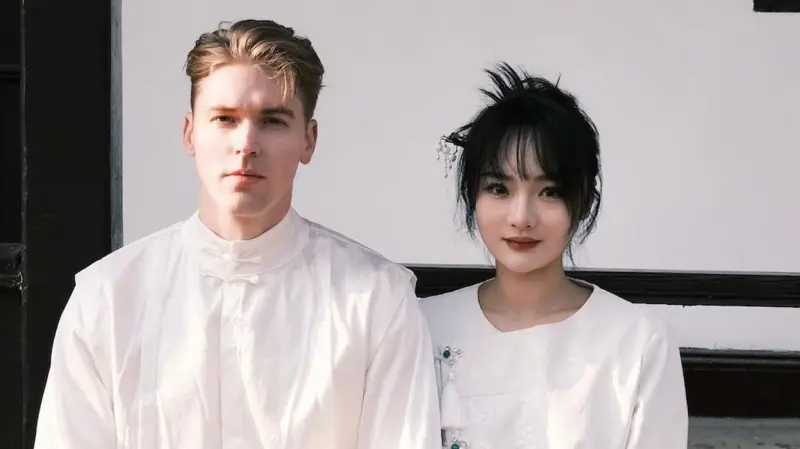
‘Beauty blogger’ Laura Deng posted some pictures of herself celebrating Christmas in London three years ago with her new British boyfriend on Chinese app ‘Shouhongshu’, similar to Instagram. She was surprised by the enthusiastic response.
Apart from the couple’s selfie, the post also featured a table with gifts, a Christmas tree and patakas. That post was more liked than Deng’s ‘fashion’ and ‘makeup’ posts. She earned hundreds of new ‘followers’.
Since then, 29-year-old Deng has changed the social media game to talk about their relationship and cultural differences. After that, the number of his followers went from a thousand to over 80 thousand at once.
She is a full-time employee in the marketing field. But due to having many followers, she has also received many advertisements. From that, she earns an extra 3,000 to 70,000 yuan (400 to 9,800 US dollars) a month.
After the number of followers crossed 10,000, he was approached by advertising agencies of various products. Now four people take care of video editing, promotion, audience development strategy for him.
Deng and her boyfriend Charles Thomas are part of a growing trend of interracial couples becoming popular on the Chinese internet. In the case of most such couples, the foreign ‘partner’ is a white man, while those following the account are young women from areas where the rich live.
An example is the account ‘TJ & Claire’ run by a woman from Shanghai and her American husband. More than 3.8 million people follow the couple on Doyin, a Chinese app similar to Tiktok. According to data analytics company Chan Mama, 60 percent of the couple’s followers are women between the ages of 18 and 30.
Last May, Deng announced her engagement to Thomas. His fans congratulated him heartily. “I have been watching your posts for a long time. Finally we get to witness the big day,” wrote one.
“Watching an interracial couple’s romance on social media is like reading a ‘digital romance novel’ for many young women. It gives life to their dreams of marriage and shows that they are unhappy with reality,” says Li Chen, a media studies researcher at West Texas A&M University.
Patriarchy remains in China. Women are expected to do housework, including taking care of children. Discrimination in the workplace continues and even after the ‘Me Too’ campaign, no changes have been made to the law.
Many young Chinese women are breaking away from traditional gender roles, even as the state pressures them to marry and have children as the fertility rate declines. In 2023, China’s population dropped to 1.449 million, which is 2.8 million less than the previous year.
Many followers assume that the relationship with the Western partner will be more egalitarian, although there is no guarantee that this will actually be the case.
“Western men generally: prioritize family care more than Chinese men,” writes one of Deng’s followers admiringly.
Qian Huang, an assistant professor of media studies at Cronje University in the Netherlands, agrees that there are signs of growing feminist leanings in China, particularly among the middle and upper-income classes. Still, she sees those who preach ‘singledom’, meaning not getting married or staying in a long-term relationship, becoming more popular.
Most of the videos posted by interracial couples include content such as Western men eating Chinese food, singing Mandarin songs, visiting famous Chinese tourist spots, or using advanced Chinese technology.
A video of Thomas walking around Leicester Square in the UK in traditional Chinese clothing is one of the most popular videos posted on Deng’s ‘Shauhongshu’ account.
The content may be similar to videos produced by pro-Beijing foreign vloggers describing their daily lives in China. Such videos support the Chinese government’s stance on highly controversial issues like Xinjiang. However, influential interracial couples rarely touch on political issues.
Having lived in the UK for a decade, Deng finds it natural to introduce her partner, his family and her culture. “I’m eager to show them the best parts of China,” she says, explaining that Westerners’ perceptions of China are based on negative media descriptions.
She recalls how impressed her partner’s parents were during their first visit to China. “They said – some things here are better than in the UK.”
Dr. Huang refers to this as “cultural nationalism.” According to him, people are angry that Chinese culture is being “overshadowed” in a “Western-dominated” world. For example, French luxury brand Christian Dior in 2022 created a skirt shaped like a horse’s face, which upset Chinese netizens because the clothing was rooted in the ancient Song Dynasty.
The Chinese Internet has deep government control. This means popular interracial couples on the internet appear to be “aligned with the government’s agenda”, says Dr Chen. “These social media influencers may not be motivated by nationalism, but they can benefit from it.”
But nationalism can be a double-edged sword.
The woman, who did not want to be named Wendy, now lives in Europe with her French partner. They are ‘engaged’. Although she does not use hashtags such as “interracial couple” or “intercultural couple”, the number of followers on ‘Shouhongshu’ has reached nearly 20,000. Wendy’s videos with her partner seem to attract more followers than her other videos.
Along with this, his posts have been flooded with racist and hateful comments, calling him everything from a “priest of the West” to a spy. Due to such attacks, she has closed her account three times.
Twenty-eight-year-old Wendy has also received collaboration offers from various brands. But he resents such ‘monotonous and unrealistic’ advertising themes. “They want to see their product presented as romantically as possible.”
“Such content challenges my original intention behind posting the video on social media and also strains my relationship with my future husband,” she says. So from this year she has started rejecting all advertising contracts.
“I want to stay true to myself and capture the good moments.”
Deng is accused of using nationalist sentiments for self-promotion. But she insists that she does not understand politics and that her content is based on personal experience and feelings.
She says, “People like to see Chinese people proudly presenting their culture to others. I don’t care what anyone says about it echoing government policy. As long as it’s fun to post, I’ll keep doing it.”